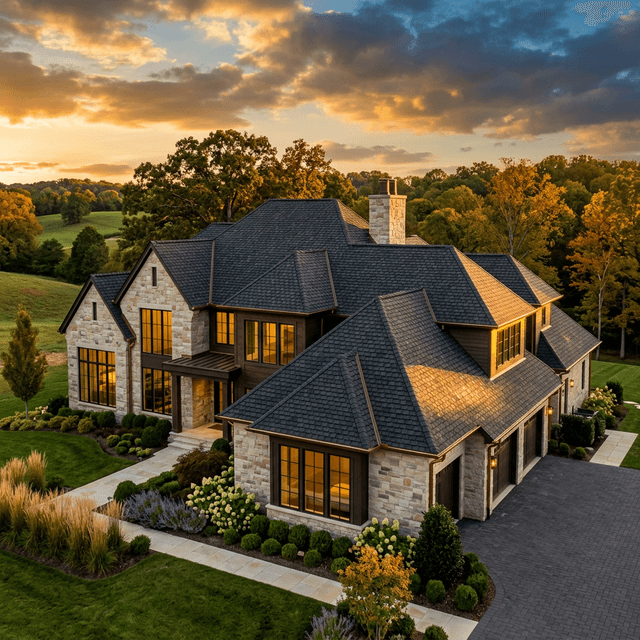
Metal Roof vs Composite Shingles: Which Is Right for You?
Compare metal roofing and composite shingles on cost, durability, aesthetics, and maintenance. Both are premium options — here's how to choose.
February 3, 20266 min read
When most homeowners think about choosing between metal and shingles, they picture corrugated panels versus basic three-tab asphalt. But neither of those is the most accurate comparison for today's premium roofing market. Composite shingles have emerged as a sophisticated alternative that deserves serious consideration alongside metal panels — and the right choice between them depends on factors specific to your home, budget, and priorities.
This guide covers what composite shingles actually are, how they compare to metal on every relevant dimension, and how to make the decision with confidence.
Composite shingles — sometimes called synthetic shingles — are manufactured from a blend of materials including recycled rubber, recycled plastic, polymer compounds, and in some formulations, fiberglass or cellulose fiber. The result is a product engineered to mimic the appearance of slate, wood shake, or traditional asphalt at a fraction of the cost of natural materials.
Top-tier composite shingle brands include Brava, DaVinci Roofscapes, EcoStar, and CertainTeed's Landmark Solaris line. These are not standard dimensional shingles — they are premium products priced and performing well above entry-level asphalt.
Appearance: Highly realistic simulation of slate, cedar shake, or clay tile
Weight: Lighter than natural slate or clay (typically 150–250 lbs per square)
Impact resistance: Class 4 (UL 2218) ratings common across leading brands
Fire rating: Class A fire resistance standard on most products
Lifespan: Typically 40–50 years, with some manufacturers claiming up to 50 years
Warranty: Leading brands offer lifetime or 50-year manufacturer warranties
Composite shingles occupy a middle ground — they deliver premium aesthetics and above-average durability without the full commitment of metal's installation complexity or price.
Premium composite shingles occupy the same general price tier as standing seam metal roofing. Installed cost varies by brand, product line, and roof complexity:
Composite Shingle Brand/Line
Installed Cost Per Sq Ft
Entry-level composite (polymer blend)
$7–$10
Mid-tier composite (DaVinci, EcoStar)
$10–$14
Premium composite (slate replica)
$12–$16
For a 2,200 sq ft roof, expect $15,400 to $30,800 for a quality composite shingle installation.
For the same 2,200 sq ft roof, standing seam metal runs $22,000 to $30,800.
Price Parity at the Premium Tier
At their respective premium levels, composite shingles and metal roofing land in a similar installed cost range. The decision between them is less about price and more about performance priorities and aesthetic preferences.
Metal roofing holds a meaningful durability advantage on lifespan:
Standing seam steel: 50–70 years
Aluminum: 40–60 years
Composite shingles: 40–50 years (manufacturer rated)
High-quality composite shingles are genuinely durable — outperforming standard asphalt by a wide margin. But standing seam metal still holds approximately a 15 to 25 year lifespan advantage over premium composites.
Both categories offer Class 4 impact resistance (the highest rating under UL 2218 testing), which means they have been tested to withstand a 2-inch steel ball dropped from 20 feet without cracking or fracturing. Both metal and composite shingles at this rating qualify for insurance discounts in most markets.
The practical difference is the failure mode: metal panels may dent from large hail but typically do not lose material integrity. Composite shingles may crack or break from severe hail, similar to asphalt — though they are considerably more resistant than standard shingles.
Standing seam metal, with its concealed clip attachment system, is inherently wind-resistant to 110–160 mph because there are no exposed fastener points to become failure locations. Composite shingles, like asphalt shingles, rely on nailing and adhesive bonding, with rated wind resistance typically in the 110–130 mph range for premium products.
In Middle Tennessee, where severe thunderstorms and tornadoes are real considerations, metal's wind resistance advantage is meaningful.
Both metal and composite shingles handle moisture well. Metal does not absorb water at all. Composite shingles are engineered to resist moisture absorption, unlike wood shakes, which are susceptible to rot, and natural slate, which can crack from freeze-thaw. However, composite shingles installed with improper flashing or on low-slope sections can allow water infiltration at edges — proper installation practice is important for both materials.
This is where composite shingles genuinely excel. The best composite products — particularly those mimicking slate and cedar shake — are visually convincing in a way that metal cannot match for traditional architectural styles.
For homes where the natural look of slate, shake, or tile is architecturally appropriate and desired, composite shingles are the stronger aesthetic choice. They look like the material they are imitating from street level and even up close.
Standing seam metal has a clean, contemporary profile that suits modern, transitional, and farmhouse architectural styles well. Metal shingles and stone-coated steel panels bridge the gap by offering profiles that reference traditional roofing shapes, but they still tend to read as modern or premium rather than traditionally natural.
Best architectural styles for metal:
Modern and contemporary homes
Farmhouse and rural residential
Mountain and cabin aesthetics
Mid-century modern
Industrial-influenced design
Let the Architecture Guide You
If your home has a traditional architectural style and you want to maintain or enhance that look, composite shingles mimicking slate or shake are likely the stronger aesthetic choice. If your home has a modern, transitional, or farmhouse sensibility, metal is probably the better fit.
Composite shingles are significantly lighter than natural slate (800–1,500 lbs/square) and clay tile (600–1,000 lbs/square). They are comparable to or slightly heavier than metal panels.
Most homes do not need structural reinforcement to accommodate composite shingles — an advantage when replacing heavier existing materials is not an option.
Metal is lighter than composite shingles, particularly standing seam profiles. This can be an advantage on older homes with aging framing, and it is the reason metal can often be installed over existing shingles in jurisdictions that permit layovers.
Both metal and composite shingles require skilled installation, but the nature of the skill requirement differs.
Composite shingles install more similarly to asphalt shingles than metal — nailed into the deck with overlapping courses. The learning curve from architectural asphalt to composite is smaller, meaning more contractors are competent to install them.
Metal roofing — particularly standing seam — requires specialized tools, training, and experience with seaming, clip attachment, expansion management, and flashing systems. Manufacturer certification programs exist specifically because the installation learning curve is steeper.
In both cases, verify contractor experience and credentials before committing. A poor composite or metal installation will underperform a well-installed product of either type.
Both categories offer strong warranties at the premium tier. Metal's coating warranties (PVDF systems) tend to outlast composite color warranties on a like-for-like basis.
Both metal roofing and composite shingles are genuinely excellent premium roofing options that significantly outperform standard asphalt shingles in durability, impact resistance, and longevity. The choice between them is less about which is better in absolute terms and more about which is better for your specific home, style, and goals.
If you are comparing composite shingles to standard asphalt, visit our guide on composition roof costs, or explore the full landscape of roofing material options at Types of Roofing Materials.
Our team in Middle Tennessee works with both metal and composite shingle systems. We will give you an honest recommendation based on your home's specific situation — not a sales pitch for whichever product carries a higher margin. Contact us to schedule a free consultation.
Frequently Asked Questions
Ready to Get Started?
Contact our team for a free consultation and detailed estimate for your roofing project.
The Opus Roofing team brings decades of combined experience in residential roofing across Middle Tennessee. We're licensed, insured, and committed to helping homeowners make informed decisions about their roofs.
Metal roof vs shingles compared side by side. Cost analysis, durability, maintenance, insurance savings, and which is better for Tennessee homes in 2026.
An honest assessment of metal roofing advantages and disadvantages. Covers durability, cost, noise, denting, energy savings, and whether it's right for your home.
Metal roofs last 40-70 years depending on material. Standing seam lasts longest at 50-70 years. Learn what affects lifespan and how to maximize your roof's life.