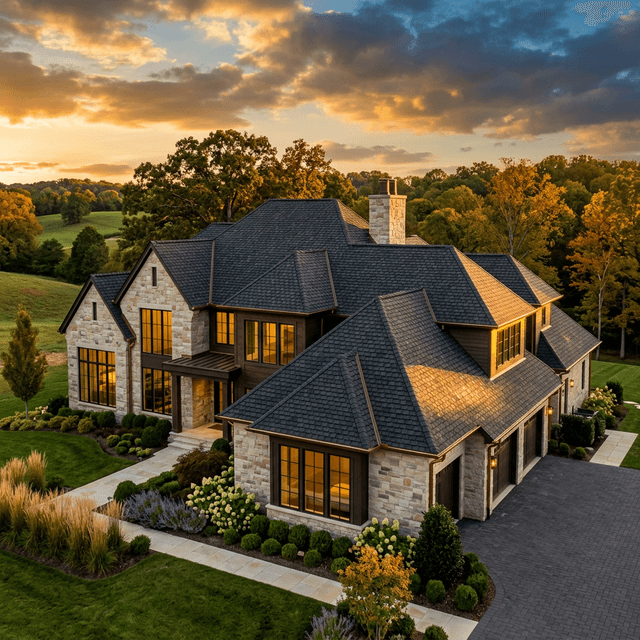
Laminate Shingles: What They Are & Why They're Popular
Laminate (architectural) shingles are the most popular roofing choice in America. Learn what makes them different, their benefits, costs, and top brands.
February 6, 202610 min read
If you have received a roofing quote recently, you may have seen the terms "laminate shingles," "architectural shingles," and "dimensional shingles" used interchangeably. They all refer to the same product — the most widely installed roofing material in the United States. Understanding what makes laminate shingles different from older single-layer shingles, what their real performance advantages are, and how to choose among the top brands is the foundation of a smart roofing decision.
This guide explains laminate shingles from the ground up: what they are made of, how they are manufactured, why they have become dominant, and what to look for when choosing a product for your Tennessee home. For the full picture of how laminate shingles fit among all roofing material types, see our overview of types of roofing materials.
"Laminate" in roofing refers to a manufacturing technique: bonding multiple layers of asphalt-saturated material together to create a single, composite shingle product. The word comes from the same root as laminate flooring or laminated glass — layers of material fused together to create a product with properties that exceed any single layer alone.
A laminate shingle consists of a full-width base layer — a complete shingle strip running the entire length of the shingle — with a shorter overlay layer bonded to the upper portion of the base. This laminated construction is what gives architectural shingles their characteristic thick, irregular appearance. The overlay layer is not cut uniformly, so each shingle has a distinct profile with varying thickness from top to bottom.
When installed on a roof with overlapping courses, the thick lower edges of each shingle course cast shadows on the course below. This creates the visible "shadow line" that distinguishes laminate shingle roofs from flat, single-layer 3-tab shingle roofs. The dimensional shadow effect is why these shingles are also called "dimensional shingles."
Three Names, One Product
Laminate shingles, architectural shingles, and dimensional shingles are identical products described from three different angles. "Laminate" describes the construction method. "Architectural" describes the premium aesthetic intent. "Dimensional" describes the visual effect on the installed roof. If your contractor or manufacturer uses any of these three terms, they are referring to the same category of shingle.
To understand why laminate shingles are popular, it helps to understand what they replaced. The previous standard — 3-tab asphalt shingles — is a single-layer product: one thickness of fiberglass-reinforced asphalt with granules on top, uniform from edge to edge, with evenly spaced cutouts creating the appearance of three individual shingles.
3-tab shingles work. They provide waterproofing and basic UV protection, they install quickly, and they remain the cheapest asphalt shingle option. But their single-layer construction means they are thinner, lighter, and less resistant to wind uplift than laminate shingles. And their flat, uniform appearance is visually unremarkable.
Laminate shingles address all of these limitations:
Thickness and weight: Laminate shingles weigh 240 to 340 pounds per roofing square (100 sq ft) compared to 175 to 225 pounds for 3-tab shingles. The additional mass comes directly from the laminated construction, and it translates to better physical resistance to wind uplift.
Wind resistance: Standard laminate shingles are rated for 110 mph wind resistance; premium products reach 130 mph. Standard 3-tab shingles carry only a 60 mph rating. In Tennessee's severe weather environment, this gap has direct practical consequences during spring storm season.
Aesthetics: The dimensional shadow profile of laminate shingles creates a premium roof appearance that is meaningfully better than the flat, grid-like appearance of 3-tab shingles.
Lifespan: Laminate shingles last 25 to 30 years under Tennessee conditions versus 15 to 20 years for 3-tab shingles.
The structural core of a modern laminate shingle is a non-woven fiberglass mat. Glass fibers are randomly oriented and bonded together into a continuous sheet with a binder material. The quality of the fiberglass mat — fiber density, binder formulation, mat weight — varies between manufacturers and between product lines within the same manufacturer. Higher-quality mats are more resistant to tearing, provide better dimensional stability, and better resist the thermal cycling stress of repeated heating and cooling.
The fiberglass mat is saturated with asphalt compound that fills the gaps between fibers and coats the mat's surfaces. A second, harder asphalt coat is then applied. The asphalt provides the primary waterproofing function and gives the shingle its flexibility at cold temperatures and its resistance to cracking. Asphalt quality and formulation vary between manufacturers and significantly affect the shingle's long-term performance. Modified asphalt formulations with polymer additions improve flexibility and cold-temperature performance.
Ceramic-coated mineral granules are pressed into the top surface of the asphalt coat before it cures. The granules serve three critical functions: they block UV radiation that would otherwise degrade the asphalt binder, they provide the shingle's fire resistance, and they give the shingle its color. Granule quality, coverage density, and adhesion to the asphalt are key quality variables. Better granule adhesion means less granule loss over time, which means longer effective UV protection. For more on granule function and shingle anatomy, see our guide on what roof shingles are made of.
After the base shingle strip is produced, a shorter overlay strip is manufactured separately and bonded to the upper portion of the base strip using an asphalt adhesive. The bond between the overlay and the base layer must be consistently strong across the full length of each shingle — inadequate lamination is a manufacturing defect that can cause delamination (layers separating) in the field, which compromises both appearance and waterproofing.
The continuous manufactured shingle material is cut to standard lengths. A thermally activated adhesive strip is applied to the back of each shingle near the bottom edge — this strip adheres to the shingle below when warmed by sunlight after installation, locking the shingle course together and dramatically improving wind resistance. Shingles are then packaged in bundles (typically three bundles per roofing square) for distribution.
One of the most significant advantages of laminate shingles over 3-tab shingles is the range of aesthetic options. Manufacturers have invested heavily in expanding color palettes and profile designs because the dimensional construction accommodates visual variety in ways that flat 3-tab shingles do not.
Premium laminate shingles are available in dozens of color options ranging from classic charcoal and weathered wood tones to architectural whites, slate blues, and earthy reds. The color is created by blending granules of different colors — a technique called "blended granule" technology that creates a variegated, multi-tonal appearance that reads as richer and more natural than a single-color granule blend.
Color blending quality varies significantly between product lines. Higher-end architectural shingles use more complex granule blends with five or more distinct granule colors to create a sophisticated, natural-looking surface. Budget products use simpler two or three-color blends that can look flat.
Within the architectural shingle category, manufacturers offer varying tab shapes — some more uniform and traditional, others more irregular and wood-shake-inspired. The depth and size of the shadow line varies between products, with premium "high-definition" architectural shingles creating a deeper, more dramatic profile. Designer (luxury) laminate shingles push this further with very large tabs and aggressive thickness variation. Our types of asphalt shingles guide covers the full spectrum from standard architectural to luxury designer shingles.
Tennessee's humid climate makes algae growth on roofing surfaces a genuine concern. The dark black streaking visible on many older roofs is caused by Gloeocapsa magma, a type of algae that feeds on the calcium carbonate in some granule types. Several top manufacturers offer algae-resistant granule options that incorporate copper or zinc particles into the granule coating — trace amounts of these metals inhibit algae growth. Products with this feature include GAF Timberline HDZ with StainGuard, Owens Corning Duration with TruDefinition, and Atlas Pinnacle Pristine with Scotchgard protection.
The thermal adhesive strip on the back of each shingle is the single most important wind resistance feature of a laminate shingle system. When the installed shingle is warmed by the sun after installation, this strip softens and bonds the shingle to the course below, creating a shingle-to-shingle connection that dramatically resists wind uplift. This is why new roofs should ideally be installed in warm weather — in very cold conditions, the adhesive strip may not activate fully, and additional hand-sealing may be required.
Some premium architectural shingle products include a reinforced nailing zone — a visually distinct area indicating optimal nail placement. Owens Corning's SureNail technology is the most prominent example: a visible fabric strip in the nailing zone that grips the nail head to prevent pull-through during wind events. Proper nail placement in the nailing zone is critical to achieving the shingle's rated wind resistance.
Premium laminate shingles use polymer-modified asphalt formulations that remain more flexible at low temperatures and more stable at high temperatures than standard asphalt. This matters in Tennessee, where summer roof surface temperatures routinely exceed 150 degrees Fahrenheit and winter temperatures can drop below 20 degrees. The wider thermal stability range of modified asphalt reduces the cracking and brittleness that develops in standard asphalt shingles at temperature extremes.
GAF is the largest roofing manufacturer in North America, and the Timberline HDZ is the best-selling residential shingle in the United States. Key features include LayerLock technology (a patented bonding method for the laminate layers), StainGuard algae protection, and a 130 mph wind rating with standard installation. The HDZ is available through GAF-certified contractors with an enhanced "Golden Pledge" warranty that covers both materials and workmanship.
The Duration Series is OC's flagship architectural line and features the SureNail reinforced nailing technology. Available with TruDefinition color technology and weathered-wood-inspired color options. The Duration Premium carries a 130 mph wind rating and lifetime limited warranty. OC's Preferred Contractor program provides access to enhanced warranty terms.
CertainTeed's Landmark is widely regarded as one of the premium-quality architectural shingles in the market. It uses dual-layer StreakFighter algae-resistant technology and is available in a broader color range than most competitors. The Landmark Pro and Landmark Premium lines extend performance further with enhanced color depth and longer non-prorated warranty terms. CertainTeed's SureStart protection covers the full replacement cost for the first years.
Atlas is a growing player in the architectural shingle market, and the Pinnacle Pristine is their standout product. It incorporates 3M's Scotchgard Protector technology directly into the shingle granules — one of the most effective algae-resistance systems available. The Pinnacle Pristine carries a lifetime limited warranty with a 130 mph wind rating.
The rated wind resistance of any architectural shingle depends on correct nail placement and nail count. The standard installation is four nails per shingle in the designated nailing zone. In high-wind zones or with certain products, six-nail fastening patterns are required for the full wind rating. Confirm with your contractor what fastening pattern will be used and that it matches the manufacturer's requirements for your chosen product.
Modern laminate shingles should be installed over synthetic underlayment rather than traditional felt paper. Synthetic underlayment is lighter, stronger, more resistant to tearing during installation, and provides better secondary water protection if shingles are damaged. It also dries quickly if exposed to rain before shingles are installed, unlike felt which can wrinkle and create an uneven surface.
Asphalt shingles should ideally be installed at temperatures above 40 degrees Fahrenheit to ensure the self-sealing strip activates properly. In colder conditions, contractors should hand-seal shingle courses with roofing cement. This is particularly relevant for Tennessee winters when temperature windows for installation may be limited.
Proper attic ventilation is one of the most underappreciated factors in shingle longevity. An under-ventilated attic traps heat that can reach 160 degrees or more during Tennessee summers. This sustained heat degrades the asphalt binder from below, shortening shingle lifespan by years regardless of shingle quality. Verify that your installation includes adequate ridge and soffit ventilation per the manufacturer's specifications.
The rise of laminate shingles from a niche product to more than 70% of all residential shingle installations is not the result of marketing. It reflects a genuine performance and value advantage that the market has recognized over time.
Laminate shingles deliver:
10 or more years of additional service life compared to 3-tab shingles
Substantially better wind resistance (110 to 130 mph vs. 60 mph)
Significantly better aesthetics that improve home curb appeal and resale value
Longer and more comprehensive manufacturer warranties
A modest upfront cost premium — roughly $60 to $90 more per roofing square — that the performance difference more than justifies
For Tennessee homeowners navigating storm season, rising material and labor costs, and increasingly strict insurance carrier requirements, laminate shingles represent the best combination of performance and value available in the asphalt shingle category.
To explore your options further, visit our shingle roofing services page or contact our team to discuss which laminate shingle product makes sense for your home, your budget, and your local climate conditions.
Ready to Get Started?
Contact our team for a free consultation and detailed estimate for your roofing project.
The Opus Roofing team brings decades of combined experience in residential roofing across Middle Tennessee. We're licensed, insured, and committed to helping homeowners make informed decisions about their roofs.
Compare the three types of asphalt shingles: 3-tab ($80-100/bundle), architectural ($100-130/bundle), and designer ($130-250/bundle). Features, costs, and lifespans.